Spec sheets get written in comfortable offices. Schools are not comfortable places for electronics. Between those two realities sits every practical decision we make at MEM when we build technology for Zambian classrooms.
The conditions on the ground
Start with power. Load shedding is a normal part of Zambian life: homes, businesses and schools all plan around it. A device that dies whenever the grid does is not a learning tool. It is a paperweight with a screen.
Then the environment. Heat degrades batteries. Dust finds every port and hinge. The roads to rural schools can be long and rough, so equipment must survive a journey in the back of a vehicle. And when something breaks in a district town, there is no technician around the corner. Distance is a design constraint, not an afterthought.
What that demands
Our answer is the Smart Solar Media Unit: offline-first learning hardware built around these realities instead of around an office park’s assumptions.
- Solar power, so the unit does not depend on a grid that is not always there.
- Educational content preloaded onto local storage, so a lesson never waits on a network.
- Low power draw and simple, robust components, because efficiency here is not a feature. It is a survival trait.
- Content that updates when conditions allow, rather than needing constant connectivity to work at all.
None of this is exotic engineering. It is constraint-driven design: decide what must be true, then remove every dependency that could break it. The grid may fail. The network may drop. The lesson still runs.
Lessons from the field
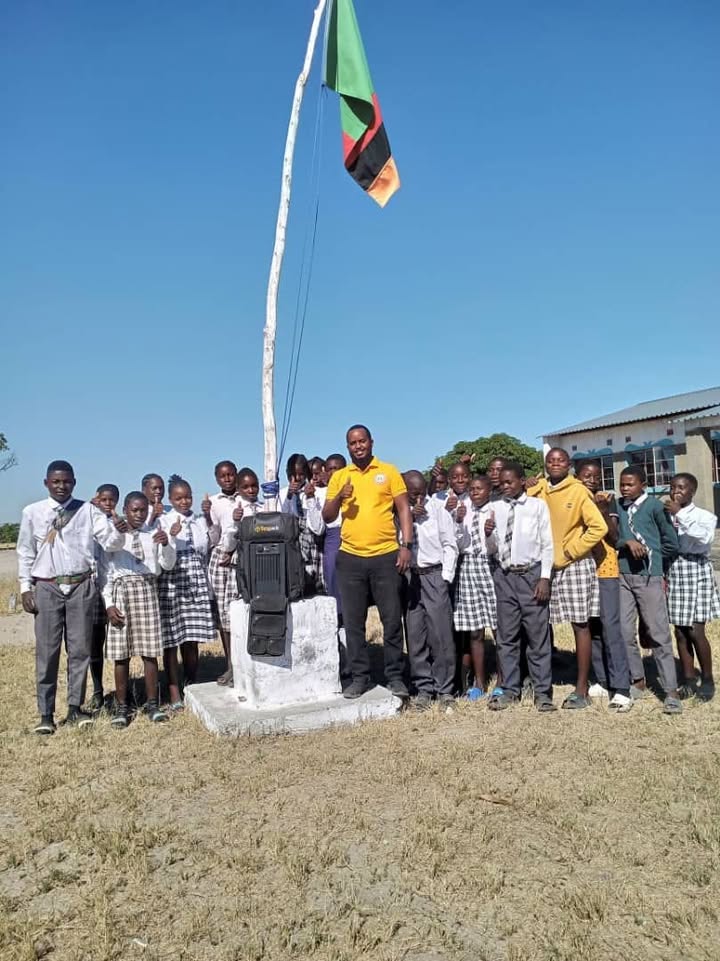
At Sitangamanyanga Primary School in Western Province, we deployed a pilot unit and watched how it was actually used. Observations reported from the pilot noted improved engagement and growing teacher confidence. A pilot teaches the builders as much as the school: placement, handling and daily routines turn out to matter as much as circuit design.
The deeper lesson is cultural as much as technical. Do not require a rural school to become fully connected before giving it digital education. Meet the school where it stands, with hardware that forgives the environment it lives in.
Planning technology for a school where power and connectivity are unreliable? Email info@memedtech.icu to talk through the options.